Process optimization
Map what actually happens, including where it departs from the SOP. Often this alone returns the hours.
Four stages, each with its own deliverables and its own exit.
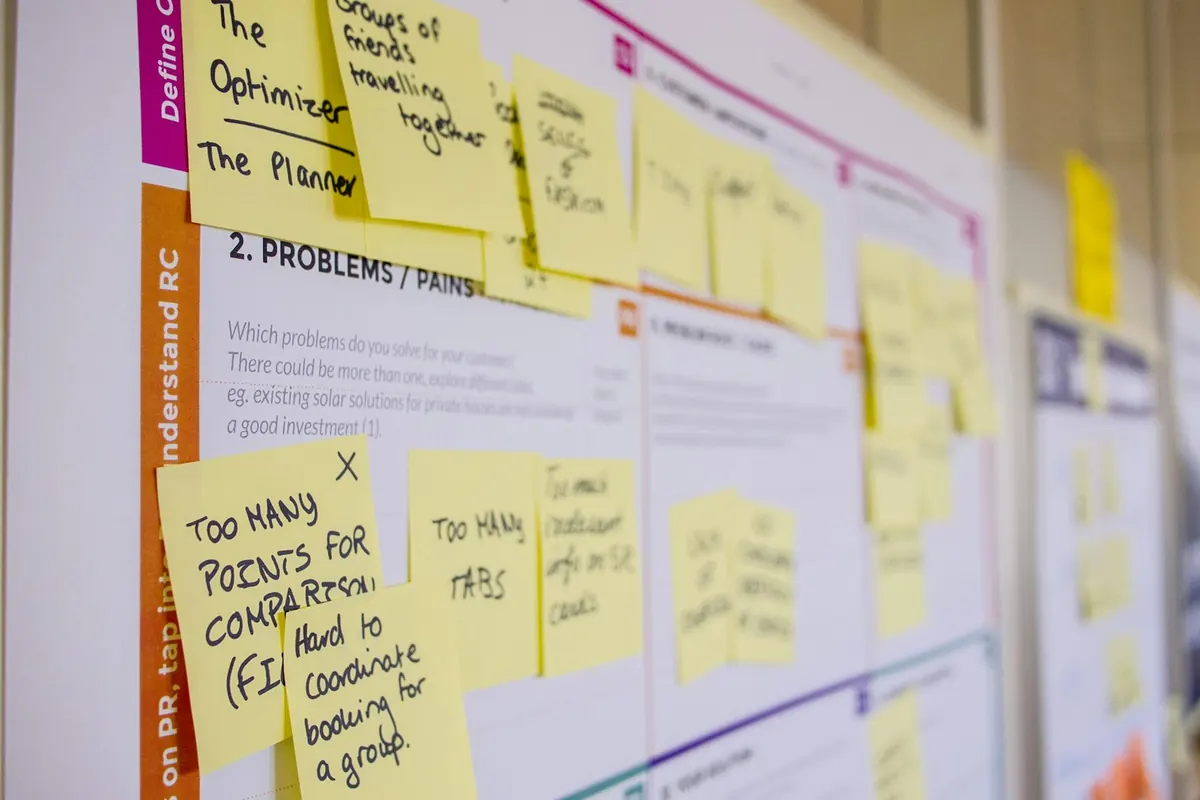
Process mapping, a systems audit, maturity scoring and a costed roadmap. Ends with a decision you can act on.
One workflow measured against acceptance criteria you set first. Failure modes documented. A go or no-go with the reasoning shown.
Full build with your people in it. Two of your team finish able to run, break and repair the system without us.
What we built, what we deliberately didn't, and what your team should consider next.
Most clients start with the first and find that half of what they assumed needed AI didn't.
Map what actually happens, including where it departs from the SOP. Often this alone returns the hours.
Deterministic workflows across the systems you run today, without a migration project hiding inside them.
Agents for work with real variance. Start read-only, summarizing bottlenecks and recommending. Add autonomy as they earn it.
Most failed AI projects are an attempt to run level three on a level one process. We'll tell you which level each process is on, and which ones aren't worth moving.
Standardized and written down. No automation yet.
Rules execute the standardized work. Fails loudly, never quietly.
Models handle real variance, with thresholds and named owners.
The system surfaces its own exceptions and improves under review.
An agent that just reads and summarizes your bottlenecks costs almost nothing, proves itself in weeks, and tells you whether the rest is worth doing. Score your process to see your level →
Much of what gets sold as AI is a rule with a language model bolted on. It costs more, fails less predictably and is harder to audit. Our default is the simplest mechanism that holds.
Inputs are structured and you want the same answer every time. Cheaper, faster, and it fails in ways you can debug at two in the morning.
The variance is real: messy documents, open-ended customer messages, drafting from context. Bounded scope, defined thresholds, a person accountable.
The process runs twice a quarter, or it's about to change, or the real problem is that two teams disagree about who owns it. We'll tell you when that's what we found.
The question isn't whether an automated system will get something wrong. It's whether you find out, how fast, and whether you can undo it.
Every decision type gets a confidence threshold and a named human owner. Below it, the system stops and asks. You approve those numbers first.
When a step can't complete, the system halts and raises rather than guessing. Silent partial success is the expensive failure mode.
Anything writing to a system of record can be rolled back, and the rollback is tested during the pilot rather than assumed.
The maturity ladder is about your process. This one is about how much rope the agent gets, and it starts at almost none. Every step up is bought with a record of being right at the step below.
The agent reads what's already there and tells you where the bottlenecks are. It changes nothing, and the summary is useful on day one.
It proposes an action with its reasoning attached; your team accepts or overrides. You're now measuring agreement rate.
It executes on approved paths and halts when confidence drops below the number you set. Volume moves; judgment stays where it was.
Routine work runs unattended, exceptions route to named owners, and people review patterns monthly rather than instances daily.
A team that has watched an agent be right for six weeks will let it do far more than a team that was told to trust it.
Every agent writes a readable trail: what it was asked, what it looked at, what it decided, how confident it was, and who signed off. This is a sample run.
We don't have a platform to sell you, so the recommendation is never self-interested. We start with what you have, and we say plainly when something else would work better.
The first question in every Survey is what your current systems can do that nobody switched on. On most engagements a meaningful share of the roadmap turns out to be capability you're already paying for.
If a different tool would remove a real roadblock, we show you the case, the cost and the switching effort. We take no margin on anything we recommend.
We won't smuggle a migration into an automation proposal, and we won't hold out on a better answer to protect a simpler scope.
A system nobody adopts has a negative return. Training and the conversation with people whose jobs change are part of the build.
Bring one process. You leave knowing which level it's on, what to fix first, and whether it's worth doing anything at all.