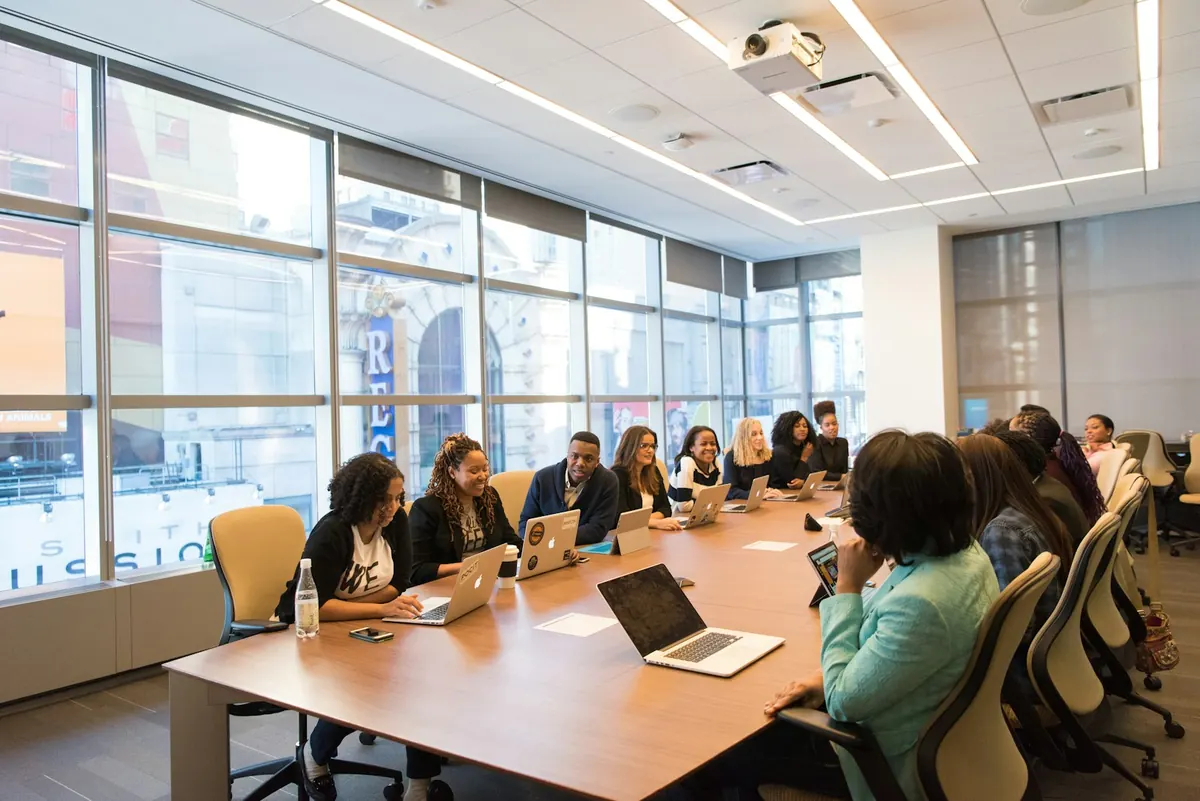
You hired your best people for their judgment. Then you gave them a week full of status updates, inbox triage and searching for the latest version of a file.
That isn't a guess. In Asana's survey of 10,624 knowledge workers, people said 58% of their day goes to "work about work": chasing approvals, switching apps, meetings about meetings. Skilled work got 33%. Strategy got less than 10%.
The work only people can do (thinking up something new, leading a team, reading a room and calming it down) gets whatever is left. Right now, that's not much.
AI could take a big piece of the busy part off the plate. Most teams haven't let it, and fear is a large part of why. Here's what the studies say about where the week goes, and how to hand over the busy work without handing over the people.
Where the week actually goes
Researchers carve up the workweek in different ways, and the details vary. The shape doesn't. In every major study, the skilled, creative part of the job is never the majority of the time.
The work people were hired for gets the smaller share of the week.
Microsoft's numbers are the hardest to argue with, because they come from product data rather than opinion. In 2023, 57% of time in Microsoft 365 went to communicating (meetings, email and chat) and 43% to creating. By 2025, it measured an interruption every two minutes during core work hours, about 275 a day. The average worker also got 117 emails and 153 Teams messages a day.
Microsoft's own summary was blunt: "We're all carrying digital debt." Its survey also found that people short on time and energy are 3.5 times as likely to struggle with strategic thinking. The busy work doesn't only take hours. It takes the hours you'd need for the hard thinking.
The squeeze lands on the most valuable work
Managers feel it most. Deloitte found that managers spend nearly 40% of their time on today's problems and admin, and only 13% developing the people who work for them.
Three times more time on today's fires than on developing people.
That 13% is the expensive part. Economists Ben Weidmann, Joseph Xu and David Deming tested this in the lab. Who led a team explained more than half of the variation in its performance. Gallup estimates that managers account for 70% of the variance in team engagement. Leadership moves the numbers more than almost anything else on a team, and it's the first thing to get crowded out.
The skills that only people bring are also the ones rising in value. Deming's research found that nearly all US job growth since 1980 came in jobs heavy on social skills. McKinsey's long-range model projects that hours needing social and emotional skills (leadership, empathy, managing others) will grow 26% by 2030, while basic data work falls.
Routine thinking shrinks while people skills grow.
Put those together and you get the core problem. Your team's most valuable assets don't show up in a task list. They show up in the time left over after the task list, and the research says there isn't much left over.
Why the busy work stays put
If so much of the week is automatable, why is it still there? Mostly habit, doubt and a quiet kind of fear.
Gallup asked US workers who have AI available but don't use it why not. The top answer was "I prefer to keep doing my work the way I do it now", at 46%. Only 10% named fear of being replaced, well behind the top answers.
Habit beats fear of replacement by more than four to one.
The fear is broader than "a robot takes my job." It's fear of change, of looking bad, and of the reward for efficiency being more work. In Microsoft's 2026 research, 45% said it feels safer to focus on current goals than to redesign work with AI. Deloitte found that 63% believe their employer will just add more work if AI makes them faster. People won't hand over the busy work if they expect the freed time to fill up with more of it.
We covered the job fears in detail in The three fears every team has about AI. The short version holds here too: the fear is rational, and it's aimed at the wrong thing.
Replace the busy work, enhance the people
AI is good at exactly the slice of work that's crowding everything else out. McKinsey estimates that collecting and processing data, the core of most busy work, is 79% to 90% technically automatable with today's tools.
There's an honest catch. The same research says generative AI also raised the automation potential of applying expertise (to about 58%) and managing others (to about 49%). AI can reach into skilled work, not only busy work. So "replace or enhance" is a design choice your team makes, task by task.
When teams choose to point AI at the routine part, the controlled experiments are encouraging:
- In a study published in Science, professionals using ChatGPT on writing tasks cut their time by 40% and raised quality by 18%. They spent less time on rough drafts and more on ideas and editing, and their job satisfaction went up.
- In a call center study of 5,172 agents, AI help raised issues resolved per hour by 15% on average, and about 30% for less experienced agents. Customers were more polite, and newer agents stayed longer.
- At Procter & Gamble, a field experiment with 776 professionals found that one person working with AI matched the quality of a two-person team without it, and reported less anxiety and frustration doing it.
One person with AI matched a two-person team and liked the work more.
In all three, AI took the routine slice (first drafts, lookups, standard answers) and people moved toward ideas, judgment and the customer conversation. That's the enhance side. One caution from the Science study: 68% of AI-assisted participants submitted the output unedited. Enhancing still needs a person in the loop.
The catch: saved time doesn't reinvest itself
Here's the part most rollouts miss. AI saves a lot of time on the task it's pointed at. Across a whole week, the measured savings are small.
Big savings on single tasks shrink to a sliver of the week.
The St. Louis Fed found that US workers using generative AI saved about 5.4% of their work hours, roughly two hours a week. In Denmark's payroll-linked data, the figure was 2.8%. The gap between 40% on a task and a few percent of the week is what happens around the task. Nobody redesigned the week, so the busy work filled back in.
BCG found that 66% of frontline employees get limited or no guidance on what to do with the time AI saves them. Slack found the most common plan for saved time was more administrative work, ahead of learning or skill building. BCG's own line sums it up: "The time individuals save doesn't automatically translate into value." Somebody has to decide where those hours go.
Five moves to swap busy work for human work
These work whether you lead the team or sit on it. If you don't run the rollout, every one of them is a fair thing to ask for.
- Measure the week first. Before picking a tool, find out where the hours go. Have the team sort a normal week into two columns: work anyone would happily hand off, and work that needs their judgment. The first column is usually longer than people expect.
- Start with the data work. Collecting, processing, routing and summarizing are the most automatable tasks and the lowest risk. Begin there, with the tool read-only at first, and leave the judgment calls with people.
- Name where the saved hours go, before you start. Write it down: two hours a week back to coaching, client calls or the project that keeps slipping. This answers the "more work" fear directly, and it's the step that turns saved minutes into something you can see.
- Let the team pick the first workflow. People adopt tools they helped shape. The person who dreads the Monday report is the best judge of what's worth automating, and what isn't.
- Free the managers first. If leadership drives more than half of team performance, a manager's admin hours are the most expensive busy work you have. Every hour moved from status reports to developing people pays back across the whole team.
If you're on the team, the two-column exercise is worth doing for your own job, even before anyone asks. Knowing which parts of your work only you can do is the best case you can make for where your time should go. Our page for team managers has more on running this with a team.
How we help
Cantera Works is built around one idea: a system your people run and own is a system they stop fearing. Every engagement is built to be handed over.
- The Survey (three weeks, fixed fee) is the two-column exercise done properly. We map how your team's week actually runs, score each workflow, and rank what's worth automating and what to leave alone. You also get a list of things your team can build without us.
- The Pilot (one workflow, four to six weeks) starts read-only and is measured against criteria you set up front. One of those criteria is where the saved hours go, so the time comes back to human work instead of more admin.
- The Build puts your people in the room while it's built. Two of your operators are trained to run, break and repair it. The code lives in your accounts, and our access ends on a date in the contract.
Common questions
Will AI replace creative work?
It can reach into some expert tasks, which is why the choice matters. In the experiments above, people who used AI for the routine part spent more time on ideas and editing, not less. Point it at the busy work first and keep a person on anything that needs judgment.
What should we automate first?
Start with high-volume data work: collecting, processing, routing and summarizing. It's the most automatable, it's easy to check, and mistakes are simple to reverse. The use cases by function page has examples by department.
How do we make sure saved time is used well?
Decide where it goes before you start, and measure it. Make "hours returned to human work" one of the success criteria, review it monthly, and adjust. Without a plan, the research says saved time drifts back into admin.
The time left over
Teams aren't short on talent. They're short on time to use it. The work only people can do is the work most likely to get squeezed out by a week full of coordination.
So replace the busy work, keep the people, and protect the hours that come back for creativity, leadership and the conversations that need a person in the room.